

A History of the Town of Leyden, MA
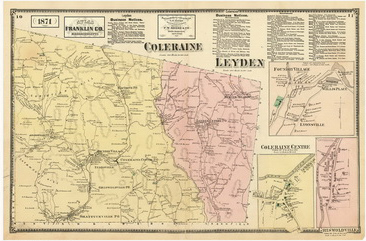
The earliest archaeological evidence of human habitation in Western Massachusetts indicates that the area was first settled by modern humans around 12,000 BP. English colonists first settled in Leyden in 1737 as part of "Fall Town," which also included Bernardston and Colrain. The town was set off from Bernardstown in 1784, but it was not incorporated until February 22, 1809. The town was named for the city of Leiden, Netherlands, refuge of the Pilgrims before colonizing the Americas.
Leyden contains about 700 year round residents. Famous sons of Leyden include John Riddell who was the inventor of the binocular microscope, and Henry Kirke Brown who was the sculptor of George Washington on horseback at Union Square in New York City, a copy of which is at West Point, and many other statues around the Capitol.
Leyden had several small industries in the eighteenth century, including grist mills, wood product mills, and dairying, but today the largest industry is maple sugar production. The town also has a reservoir which supplies the town of Greenfield.
The Brotherhood of the Spirit commune was founded in Leyden in 1968.
The Town of Leyden acknowledges that it was founded upon exclusions of many Indigenous peoples and erasure of their history, including those on whose land this town is located. We are gathered on the unceded land of the Wabanaki peoples of the Dawnland Confederacy and N’dakina peoples of the Abenaki community, their elders both past and present, as well as future generations. This acknowledgement demonstrates a commitment to begin the process of working to dismantle the ongoing legacies of settler colonialism.
From Wikipedia